
Work Text:
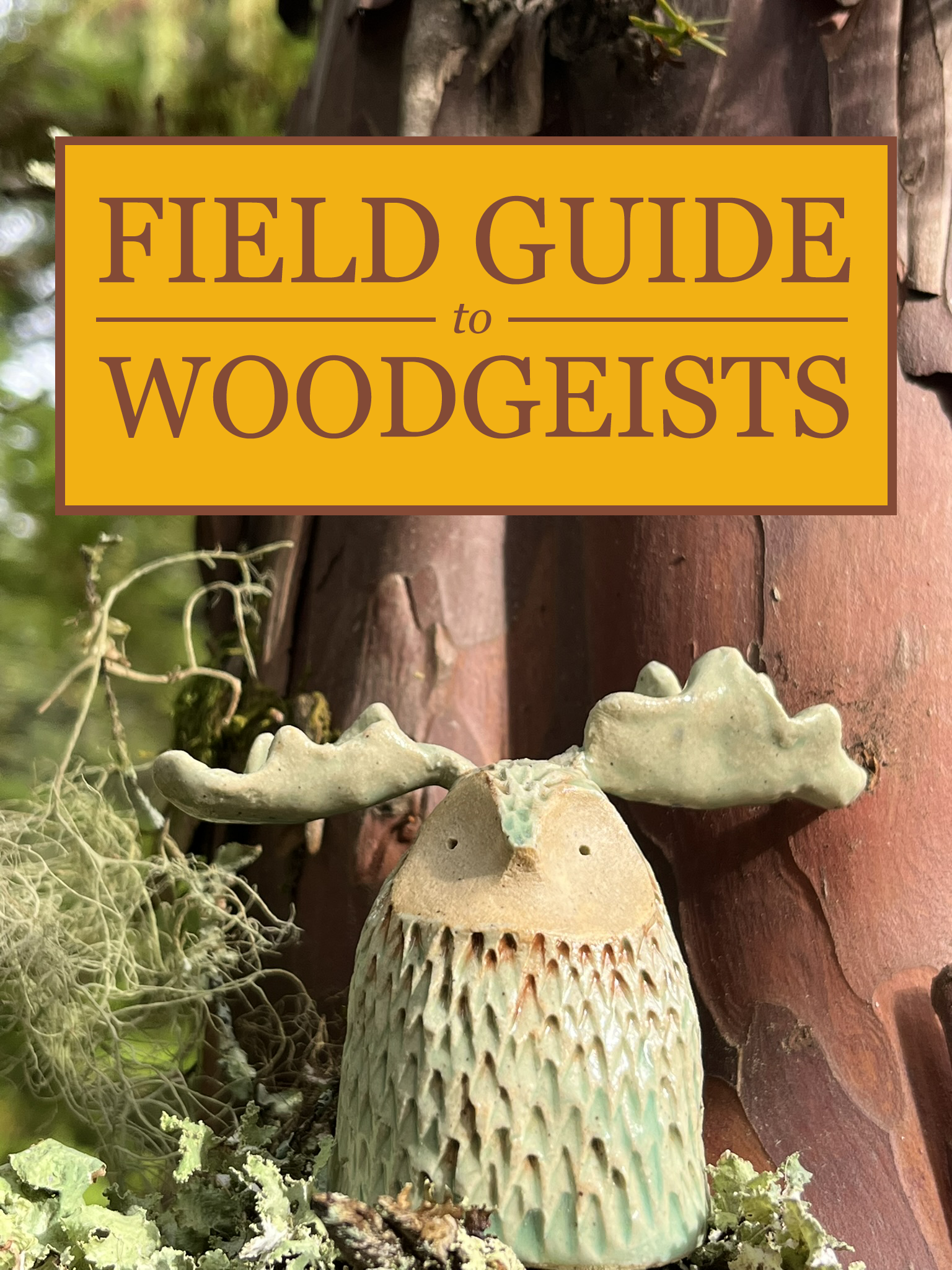
Foreword
It is an honour to be writing this foreword of a new edition of Field Guide to Woodgeists.
Not so long ago, the idea of a field guide for any group of locus spirits was considered preposterous. Guides to your local flora, fauna, and fungi could be found at any bookseller, but for many years, no such books existed for the many thousands of species and subspecies of Accolaparvus that inhabit our lives.
Many have speculated as to the reason why: their notoriously variable appearance, which long defied attempts at taxonomic classification; anthropocentric dismissal of our mutualist partners; or the simple fact of their commonness.
I have the privilege of being in the happier business of merely finding and describing them. Nonetheless, upon publication of the first edition, I was surprised by the warmth of its reception. But how fitting for a book about spirits known for their exothermic processes! I believe we are at the beginning of a new era of academic and layman interest in this once overlooked clade.
A. silva are the most diverse and widely-distributed species of Accolaparvus, and this edition is the product of years of fieldwork by naturalists across the world. It is my pleasure to present it to you.
Whether you are a hobbyist or expert, I hope this field guide will prove indispensable.
With gratitude,
P. Hees-Gottwyn, Ph.D
Introduction to Woodgeists
We have come a long way from the origins of the common name of Accolaparvus silva. Documented first as woodgeists or woodghosts, these ancient common names hold a record of the early beliefs that the spirits lived inside the trees themselves, drifting after them even when they were felled and converted into human shelters.
In reality, they are, as are all Accolaparvus, attracted to the carbon dioxide we exhale. In what may be the most well-known example of mutualism, they produce a small exothermic reaction as their own waste product. This has led to the human species frequently assigning them similar collective nouns across time, language, and geography. In English, it is ‘warmth’, as in ‘a warmth of woodgeists’. Indeed, many a beleaguered traveler on a rainy night has been grateful for their presence.
These spirits are essential to their ecosystems and a valuable indicator species for woodland health. The appearance of A. silva and indeed all members of Accolaparvus, is influenced by populations of other species in their area of origin. It is an extraordinary example of polymorphism, although these natural variations can make identification a challenge. The appearance of individual woodgeists may support evidence of the presence of rarer species in the wild that have not been seen by humans for years.
Area of origin is the term used in this guide, rather than ‘range’, which is somewhat limited in utility when applied to a mutualist species that follows animals including humans. Outlying individuals were once believed to be lost in the manner of migratory birds: blown astray in storms or simply possessed of a defective internal compass. Our own species’ exceptionally migratory nature eventually transformed curious anecdote into clear evidence: locus spirits will follow specific individuals from their area of origin for thousands of miles, and will even form isolated but healthy populations in human diasporas. Once outside their area of origin, they are remarkably resistant to the environmental influences that typically characterize their appearance. It comes as no surprise that they are treated in many cultures as symbols of home.
These days, as humans range as individuals and communities far beyond the distance and predictability of other great migrations, you are as likely to find a woodgeist in the desert as a forest. Nonetheless, other identifiers will help you to better understand the woodgeists you encounter, although the nature of locus spirits means that identification is not always a simple answer, but rather a lifelong journey and joyous challenge.
Accolaparvus silva ss. glauca (p.104-105)
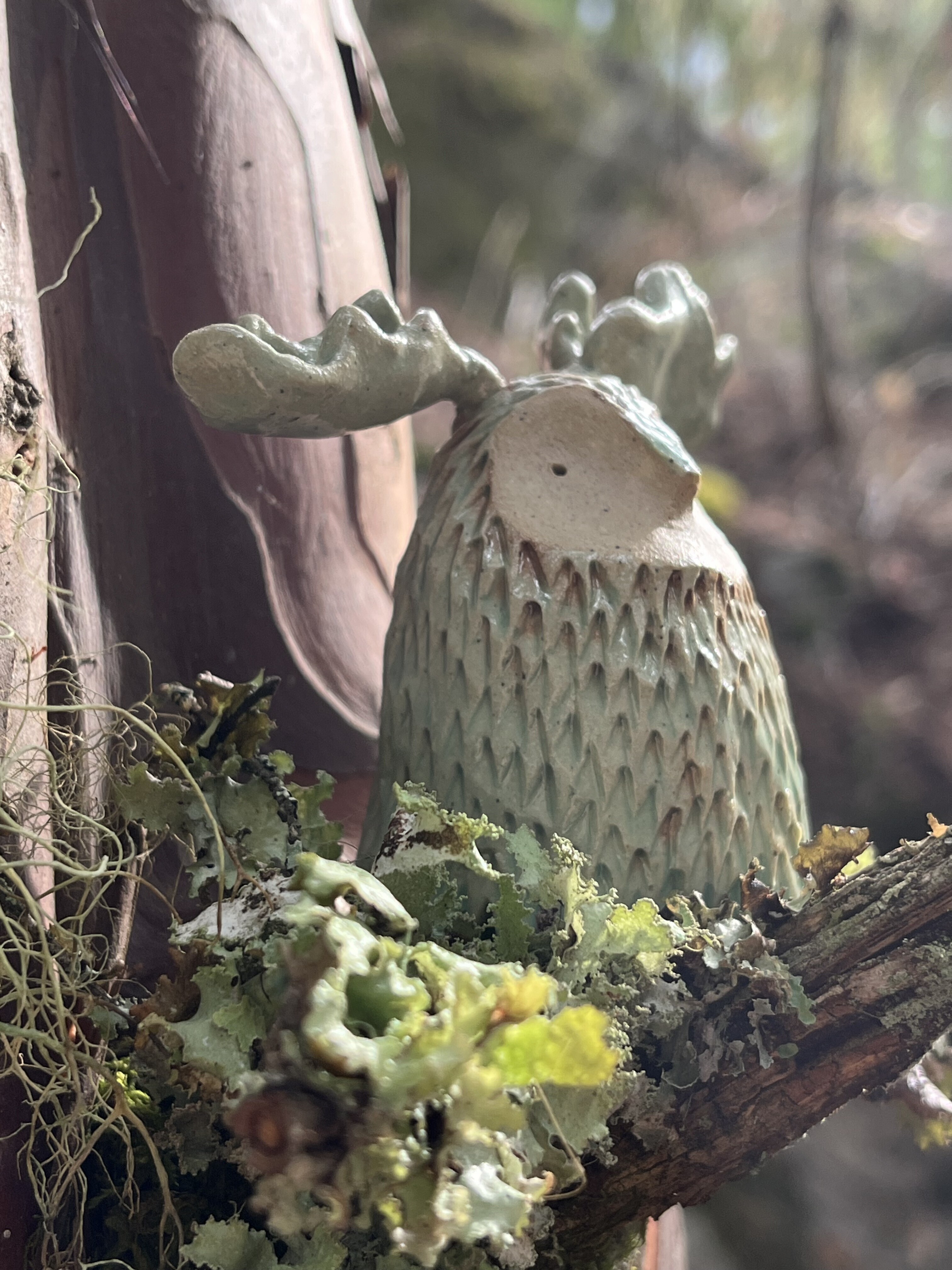
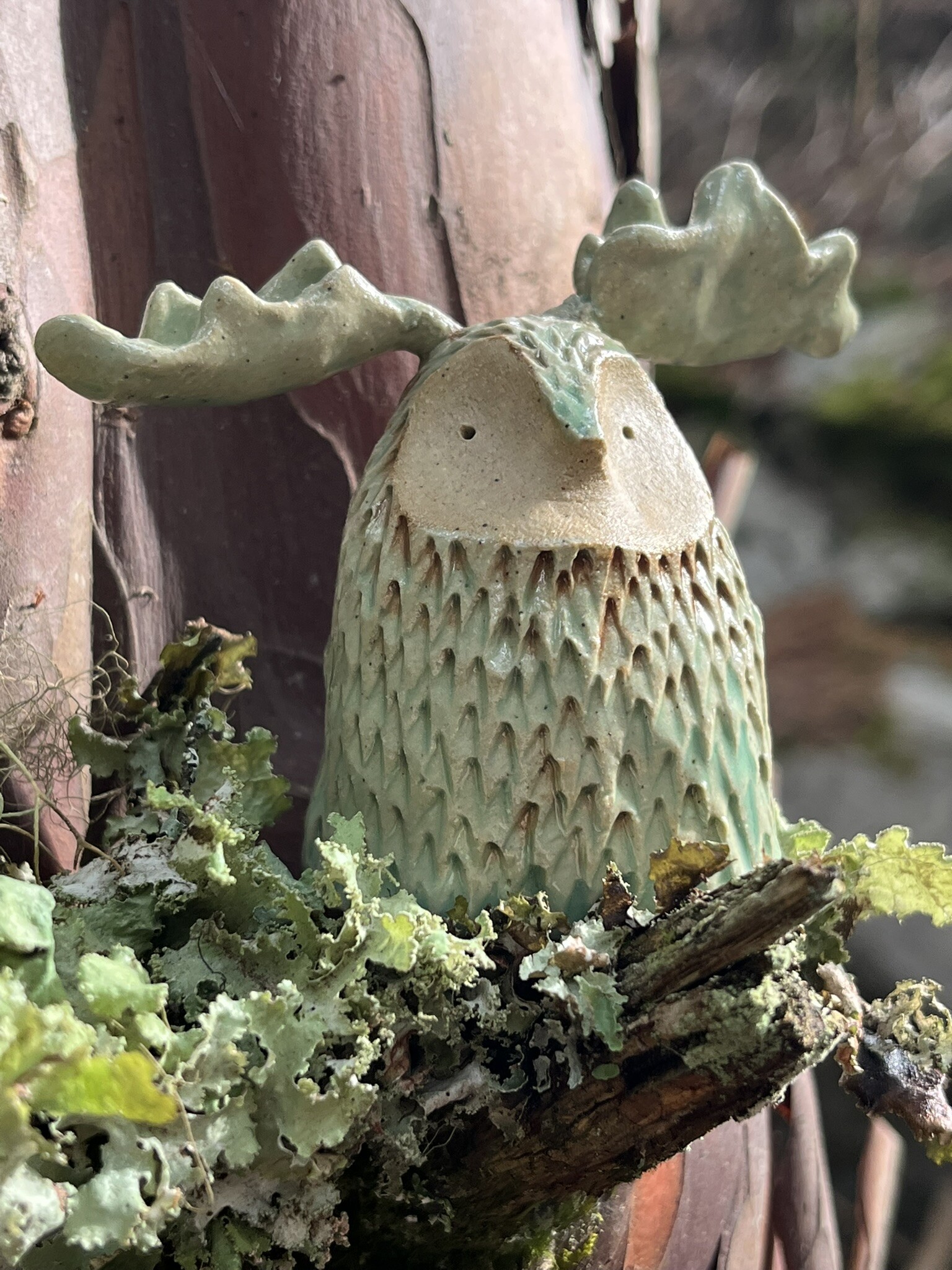
GENERAL: Common name 'pale woodgeist' or 'rainy woodgeist'. Frequent non-human mutalist partners are cervids, bears, and birds.
AREA OF ORIGIN: Widespread in coniferous forests at low to mid elevations. Particularly prolific in wet montane environments such as temperate rainforests. Less commonly originating from dry and open forests where tawny woodgeists (ss. fulvus) predominate.
APPEARANCE: Paler colouring than many other subspecies of woodgeist have given this group of locus spirits their common name. A silvery-blue or green colour is a strong indicator of ss. glauca. A relatively large subspecies of woodgeist due to high populations of megafauna in their area of origin. Often feathered. Antlers in midsummer through early winter. Somewhat easily distinguished from alpine woodgeists due to size.
NOTES: Bear-mutalist pale woodgeists will overwinter with their partners in shallow nests of forest detritus. Pale woodgeists, like all woodgeists and fieldgeists, are essential to the winter survival of small songbirds such as golden-crowned kinglets, whose energetic needs in cold temperatures require them to feed nearly constantly while awake. Some pale woodgeists are larger than these tiny birds!
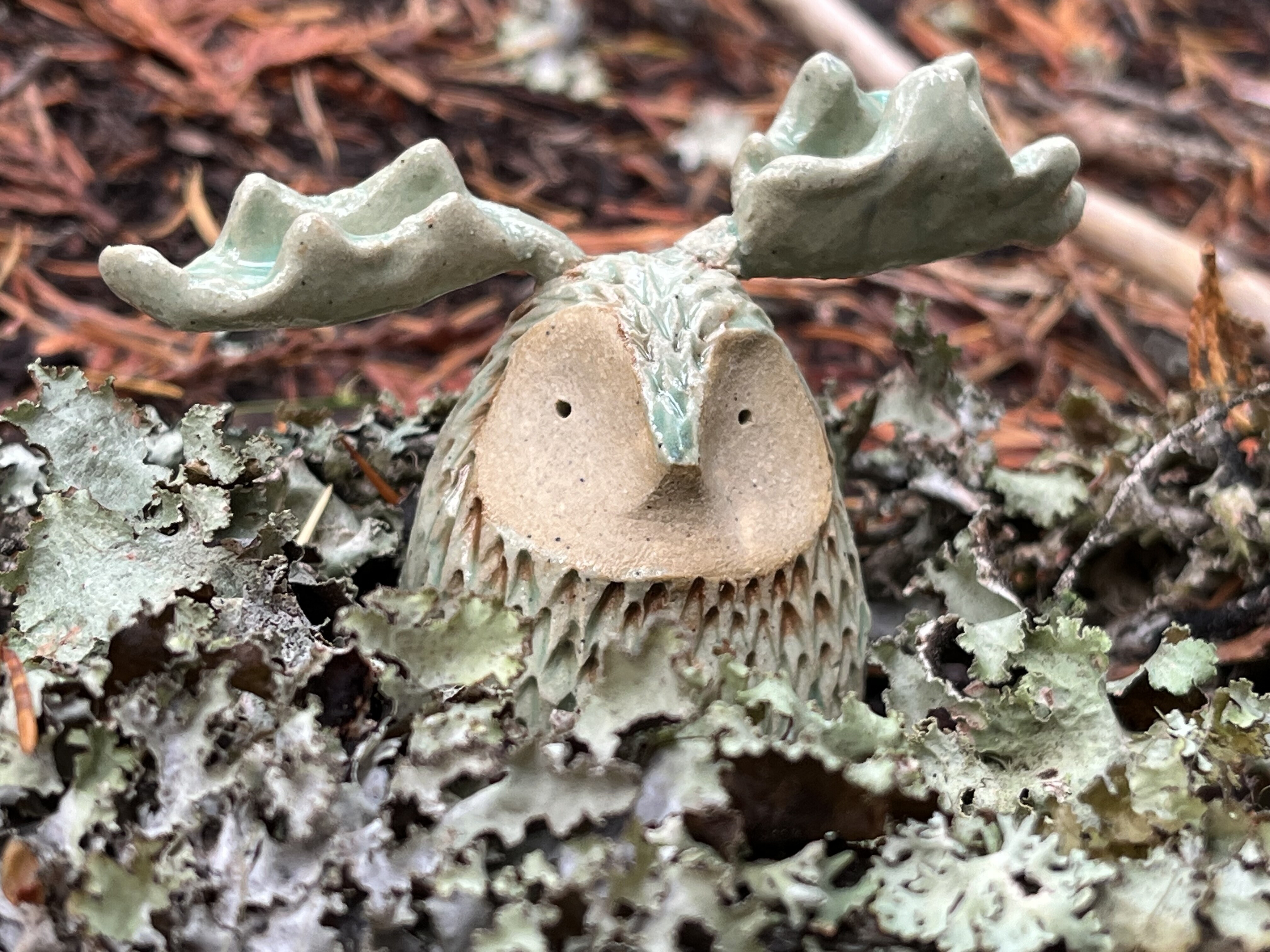
This individual is well camouflaged in its nest of ragbag lichen (Plastismatia glauca) with which it shares the Latin
descriptor, glauca, meaning 'blueish-grey' or 'silvery' or 'pale green'.
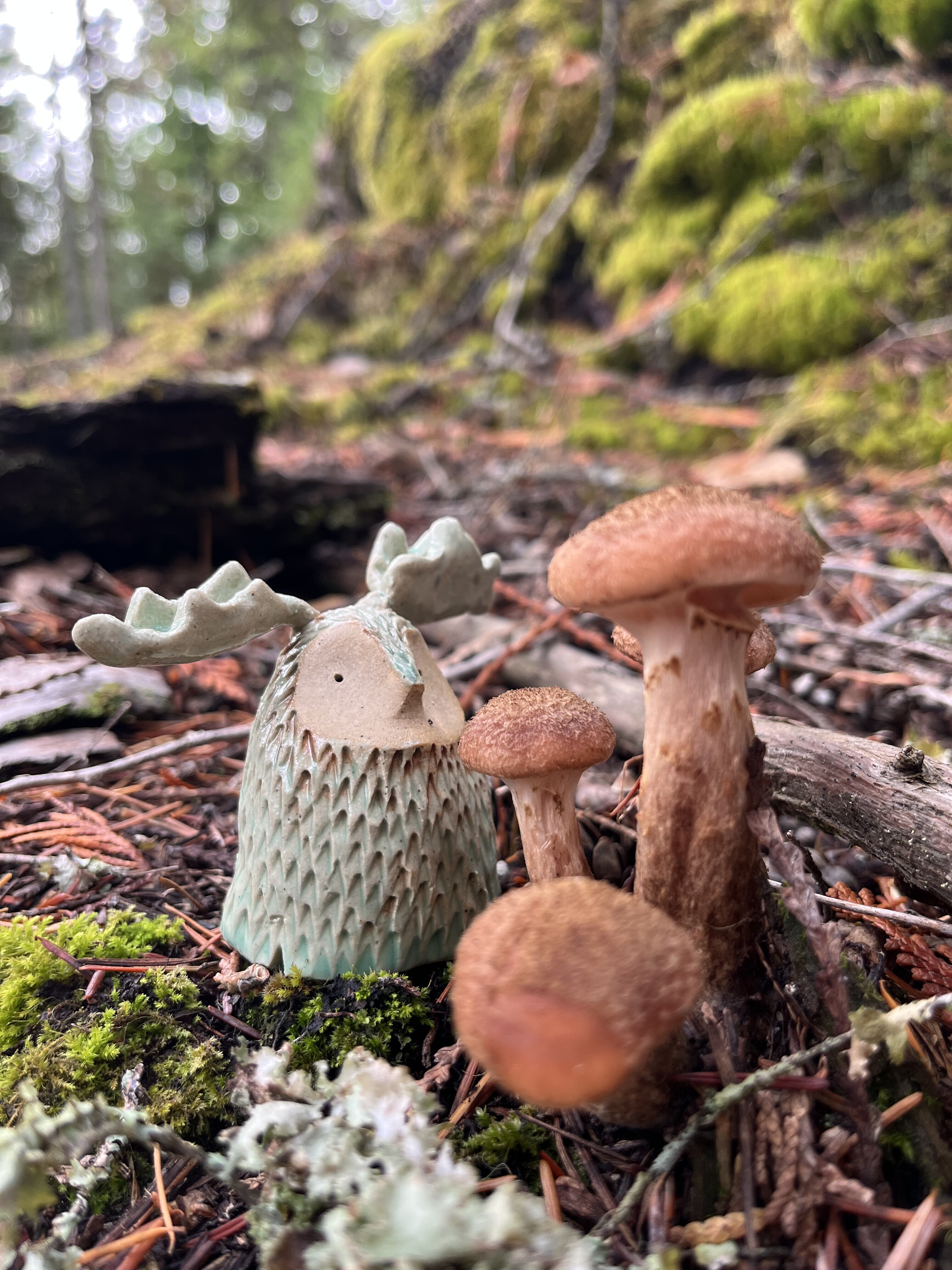
Most pale woodgeists are 3-8 centimeters tall. Occasionally, their antler spread exceeds their height.